Wood Cabinet Fronts Specifications
Styles and construction types of wood cabinet fronts
Wood cabinet fronts are the part of the cabinet that cover the face and in some cases the sides of kitchen, bath, and office cabinets. These components provide style and protect what is stored in the cabinet.
Fronts are used for doors, drawer fronts, side panels, and end panels.
Cabinet fronts are constructed using three different methods: five piece mortise and tenon (also called cope and stick), five piece mitered, and slab.
This document will describe each construction type, their parts, and specifications as offered by The Cabinet Door Store.
Cabinet Front Wood Species
When referring to the available wood species for cabinet fronts, we are defining both species, grade, and character.
Currently available specie/grade with code:
Paint Grade Maple w/ MDF Panel (PGMF)
Paint grade maple is Hard Maple where color and grain variations along with mineral staining and brown heartwood are purposely encouraged and no effort given to color matching. Center panels are made from Medium Density Fiberwood. This combination is great for painted cabinet fronts because it gives strength and durability to the frame and necessary stability to the center panel. We highly recommend this combination for all primed and painted doors and drawer fronts. 5-PC or slab fronts with veneer or solid wood center panels are not warranted if painted.
Hard Brown Maple, Flat Cut, Select (HBMS)
Natural Hard Maple is the standard species and grade for our Hardwood Dovetail Drawer Boxes and Paint Grade Maple door frames. The brown heartwood is more prevalent in this grade as well as mineral streaking and small, closed knots.
Cherry, Flat Cut, Select (CFCS)
Select Cherry is the standard grade of Cherry. Color and grain variations are only tolerated to a limited degree. The color is fairly uniform with little or no sapwood and well matched. Moderate color variations are allowed between doors. A few small pitch marks and/or pin knots may be allowed and some sapwood and or mineral streaks may be found in machined areas. This wood grade is well suited to most applications where medium to light spray stain finishes are required.
Clear Alder, Flat Cut (CAFC)
Clear Alder provides results for an inexpensive cabinet door that resembles select cherry. Color on this type of door will be fairly uniform with consistent grain structure with a few pin knots allowed. This type of wood grade is usually finished with a light colored spray stain.
Hickory, Flat Cut, Select (HFCS)
Premium Hickory is a special designer grade of Hickory. For this wood grade, the sapwood and heartwood are matched and blended to flow through the panel in such a way as to minimize abrupt color changes along lamination lines. This is a very attractive natural looking wood grade and is usually finished clear but most light spray stains work well on this door.
Knotty Alder, Flat Cut (KAFC)
Knotty or Rustic Alder is a special designer grade of Alder. Color on this type of wood grade will be fairly uniform but grain variations and knots of all types and sizes will be present. It should be noted that alder knots usually contain slightly opened cracks. We make an attempt to make sure these knots are not open enough to allow light through but checking on edges is acceptable. This type of wood grade is usually finished with a light colored spray stain.
Red Oak, Flat Cut, Select (ROFS)
Select Red Oak is our standard grade used for Oak products. Color and grain variations are held to closer tolerances than in a Natural grade. The color is fairly uniform and well matched. Moderate color variations are allowed between doors. A few of the smallest pin knots may be allowed along with a small amount of mineral streaks and sapwood allowed in machined areas. This wood grade is well suited to most applications where lighter spray or wipe stain finishes are specified.
Red Oak, Quarter Cut, Select (ROQS)
Color and grain variations are only tolerated to a limited degree. The color is fairly uniform and well matched. Moderate color variations are allowed between doors. A few of the smallest pin knots may be allowed along with a small amount of mineral streaks and sapwood allowed in machined areas. Being Quarter Cut, this wood type creates a tiger stripe and straight grain mix with an emphasis being placed on choosing material with ray flakes. This wood grade is well suited to most applications where light to medium spray or wipe stain finishes are specified.
Walnut, Flat Cut, Select (WFCS)
Select Walnut is our standard grade of Walnut. Color and grain variations are tolerated to a limited degree. The color variation is fairly uniform allowing the lighter colors to appear only in some deeper profiles and on the back side of the door. A few pin knots and small knot clusters may be allowed if overall color is consistent. This wood grade is well suited for light stains to dark stains.
White Maple, Flat Cut, Select (WMFS)
Select Hard Maple (White Maple) is used for our stain-grade maple doors and drawer fronts. Color and grain variations are only tolerated to a limited degree. The color is fairly uniform and well matched. Moderate color variations are allowed between doors. A few of the smallest pin knots may be allowed along with a small amount of mineral streaks and brown heartwood allowed in machined areas. This wood grade is well suited to most applications where medium to light spray stain finishes are specified. Here's a great article on the differences between Soft and Hard Maple.
White Oak, Rift Cut, Select (WORS)
Color and grain variations are only tolerated to a limited degree. The color is fairly uniform and well matched. Moderate color variations are allowed between doors. A few of the smallest pin knots may be allowed along with a small amount of mineral streaks and sapwood allowed in machined areas. Being Rift Cut, this wood type minimizes the ray flakes in the White Oak and creates a fairly 'straight grain' look. This wood grade is well suited to most applications where light to medium spray or wipe stain finishes are specified.
White Oak, Flat Cut, Select (WOFS)
Select White Oak is our standard grade of White Oak. Color and grain variations are only tolerated to a limited degree. The color is fairly uniform and well matched. Moderate color variations are allowed between doors, with a few small pin knots being allowed. This wood grade is well suited to most applications where light to medium stain finishes are specified.
White Birch, Flat Cut, Select (WBFS)
Natural characteristics common in this species are allowed, which results in a mixture mostly of sapwood with some heartwood allowed. A small percentage of minerals and flecks will be allowed on the face and in profiled areas. We recommend a “Spray No Wipe” stain process, not a Wiping stain process when using this species. This grade is most desirable for a medium to dark stain.
Five Piece Mortise and Tenon (Cope & Stick)
This construction method is made up of left and right stiles, top and bottom rails, and a center panel. Stiles run from the top of the front to the bottom and receive the tenon (cope) machined into the ends of the rails. Rails butt into the stiles. These fronts can also have multiple panels separated by center stiles and/or mid rails.
Size
The overall size of the front is expressed by width and height (in that order) in inches. Width is the desired overall width of the front and Height is the desired overall height of the front. Fronts are manufactured in 1/16” increments.
Width
For tenon fronts, the minimum width that can be manufactured is 6 ⅛” (C41 Flat Panel with a 1 ½” frame width) and the maximum width is 48”. For fronts used as doors, we recommend a maximum width of 24”.
Minimum Overall Width
For CP41 (¼” Flat Panel)
Frame Width (S) | 1 Panel Wide | 2 Panels Wide | 3 Panels Wide |
1 ½" | 6⅛" | 11" | 15¾" |
1 ¾" | 6¾" | 11¾" | 16¾" |
2" | 7¼" | 12½" | 17¾" |
2⅛" | 7½" | 12⅞" | 18¼" |
2¼" | 7¾" | 13¼" | 18¾" |
2½" | 8¼" | 14" | 19¾" |
2⅝" | 8½" | 14⅜" | 20¼" |
2¾" | 8¾" | 14¾" | 20¾" |
3" | 9¼" | 15½" | 21¾" |
3¼" | 9¾" | 16¼" | 22¾" |
3½" | 10¼" | 17" | 23¾" |
3¾" | 10¾" | 17¾" | 24¾" |
4" | 11¼" | 18½" | 25¾" |
For Raised Panels (CP42–CP47)
Frame Width (S) | 1 Panel Wide | 2 Panels Wide | 3 Panels Wide |
1 ½" | 8⅜" | 15¼" | 22⅛" |
1 ¾" | 8⅞" | 16" | 23⅛" |
2" | 9⅜" | 16¾" | 24⅛" |
2⅛" | 9⅝" | 17⅛" | 24⅝" |
2¼" | 9⅞" | 17½" | 25⅛" |
2½" | 10⅜" | 18¼" | 26⅛" |
2⅝" | 10⅝" | 18⅝" | 26⅝" |
2¾" | 10⅞" | 19" | 27⅛" |
3" | 11⅜" | 19¾" | 28⅛" |
3¼" | 11⅞" | 20½" | 29⅛" |
3½" | 12⅜" | 21¼" | 30⅛" |
3¾" | 12⅞" | 22" | 31⅛" |
4" | 13⅜" | 22¾" | 31⅛" |
Height
The minimum height for tenon cabinet fronts is 4 ⅛” and the maximum height is 96”. While this maximum height is possible to manufacture, standard mortise and tenon cabinet front construction does not lend itself well to heights over 72”. This is especially true for fronts used as doors.
Minimum Overall Height
For CP41 (¼" Flat Panel)
Frame Width (S) | 1 Panel High | 2 Panels High | 3 Panels High |
1 ½" | 4¼" | 7" | 9¾" |
1 ¾" | 4¾" | 7¾" | 10¾" |
2" | 5¼" | 8½" | 11¾" |
2⅛" | 5½" | 8⅞" | 12¼" |
2¼" | 5¾" | 9¼" | 12¾" |
2½" | 6¼" | 10" | 13¾" |
2⅝" | 6½" | 10⅜" | 14¼" |
2¾" | 6¾" | 10¾" | 14¾" |
3" | 7¼" | 11½" | 15¾" |
3¼" | 7¾" | 12¼" | 16¾" |
3½" | 8¼" | 13" | 17¾" |
3¾" | 8¾" | 13¾" | 18¾" |
4" | 9¼" | 14½" | 19¾" |
For Raised Panels (CP42–CP47)
Frame Width (S) | 1 Panel High | 2 Panels High | 3 Panels High |
1 ½" | 6⅜" | 11¼" | 16⅛" |
1 ¾" | 6⅞" | 12" | 17⅛" |
2" | 7⅜" | 12¾" | 18⅛" |
2⅛" | 7⅝" | 13⅛" | 18⅝" |
2¼" | 7⅞" | 13½" | 19⅛" |
2½" | 8⅜" | 14¼" | 20⅛" |
2⅝" | 8⅝" | 14⅝" | 20⅝" |
2¾" | 8⅞" | 15" | 21⅛" |
3" | 9⅜" | 15¾" | 22⅛" |
3¼" | 9⅞" | 16½" | 23⅛" |
3½" | 10⅜" | 17¼" | 24⅛" |
3¾" | 10⅞" | 18" | 25⅛" |
4" | 11⅜" | 18¾" | 26⅛" |
Thickness
Our doors and drawer fronts are manufactured to a finished thickness of .8” (20mm).
Tolerances
Cabinet fronts are guaranteed to be manufactured within +/- 1/16” of the desired width and height. Warping is always a factor with 5-piece tenon cabinet doors and drawer fronts. We warrant that any door or drawer front under 24”x48” will have an allowance of ⅛” for warpage. Doors between the size of 24”x48” and 24”x72” will have an allowance of ¼” for warpage. Any doors wider than 24” and taller than 72” will not be warranted for warpage.
Mortise & Tenon Cabinet Front Shapes and Grain Direction
Cabinet fronts can be made in several different configurations in regards to the number of panels and the direction of the woodgrain.
1 Panel, Vertical Grain (1V)
This configuration has one center panel and the woodgrain runs vertically. This is the most common configuration for kitchen and bath cabinet doors and taller drawer fronts.
1 Panel, Horizontal Grain (1H)
This configuration has one center panel and the woodgrain runs vertically. This is the most common configuration for short kitchen and bath drawer fronts.
2 Panels High, Vertical Grain (2HV)
This configuration has a top panel and a bottom panel separated by a midrail. The woodgrain runs vertically. This configuration is recommended for doors over 48” tall and is most commonly used for pantry cabinet doors and tall end panels.
2 Panels High, Horizontal Grain (2HH)
This configuration has a top panel and a bottom panel separated by a midrail. The woodgrain runs horizontally. This configuration is not commonly used but might be preferred when a taller front is wider than it is high.
2 Panels Wide, Vertical Grain (2WV)
This configuration has left and right panels that are separated by a center stile. The woodgrain runs vertically. This configuration is recommended for fronts over 24” wide and is most commonly used for wider doors, drawer fronts that are taller, base end panels, and bar backs.
2 Panels Wide, Horizontal Grain (2WH)
This configuration has left and right panels that are separated by a center stile. The woodgrain runs horizontally. This configuration is most commonly used for short drawer fronts that are over 40” wide.
2 Panels High, 2 Panels Wide, Vertical Grain (2X2V)
This configuration has 4 equal size panels separated by one midrail and two center stiles with woodgrain that runs vertically. This configuration is not common but used with large fixed panels.
2 Panels High, 2 Panels Wide, Horizontal Grain (2X2H)
This configuration has 4 equal size panels separated by one midrail and two center stiles with woodgrain that runs horizontally. This configuration is not common but used with large fixed panels.
3 Panels High, Vertical Grain (3HV)
This configuration has top, middle, and bottom panels stacked vertically with two midrails separating them. The woodgrain runs vertically. This configuration is not common but can be used for tall cabinet and pantry doors.
3 Panels High, Horizontal Grain (3HH)
This configuration has top, middle, and bottom panels stacked vertically with two midrails separating them. The woodgrain runs horizontally. This configuration is not commonly used.
3 Panels Wide, Vertical Grain (3WV)
This configuration has left, middle, and right panels with center stiles separating them. The woodgrain runs vertically. This configuration is most commonly used for wide bar backs and wainscot.
3 Panels Wide, Horizontal Grain (3WH)
This configuration has left, middle, and right panels with center stiles separating them. The woodgrain runs horizontally. This configuration is not commonly used.
Mortise & Tenon Cabinet Front Frame
The frame of a cabinet front is the four outside boards that surround the center panel. The left and right boards run from top to bottom and are called stiles. The top and bottom boards butt into the side stiles and are called rails. In fronts that have multiple panels, boards that run vertically are called center stiles and boards that run horizontally are called midrails.
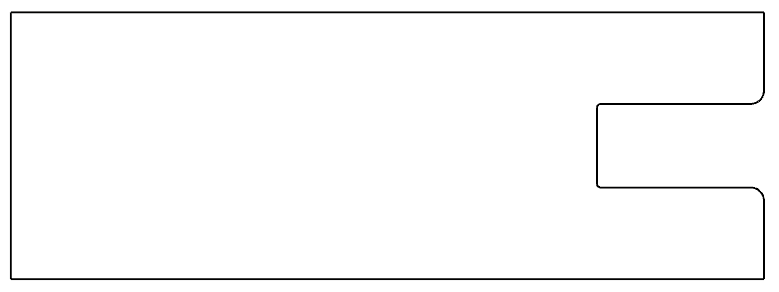
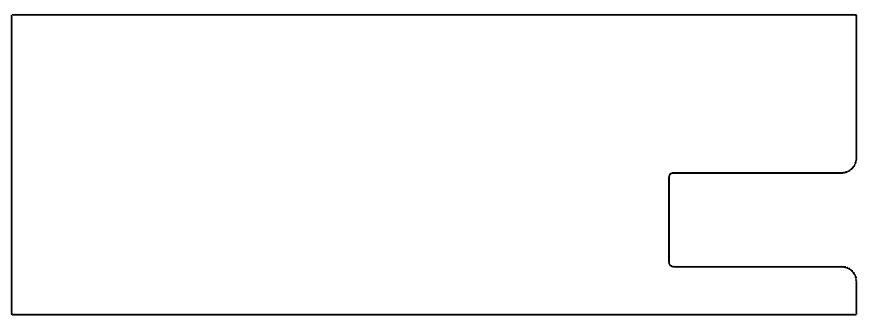
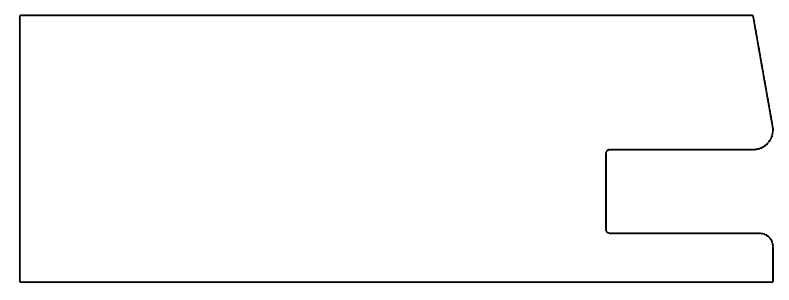
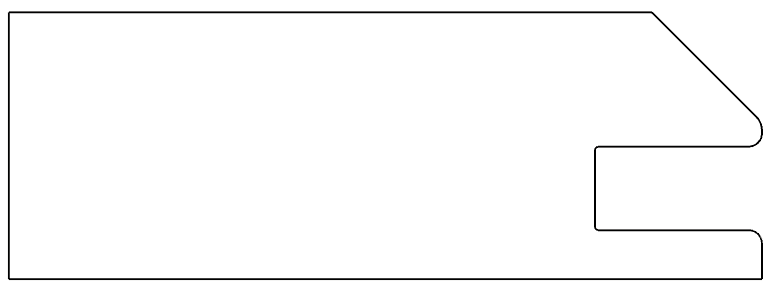
The inside of the frame can be shaped in different profiles, also called sticking. These profiles are called the Stile and Rail Profile. This profile includes the ¼” x ½” mortise (dado) that holds the center panel in place as well as the tenon, or cope, at the ends of each rail.
Stile and Rail Profiles
We have ten standard inside stile and rail profiles for mortise and tenon fronts:
Profile | Profile Code | Description |
|---|---|---|
| SR11 | Centered Dado (¼” inset from front; Only works with CP41 & CP45 Center Panel Profiles) |
| SR12 | Deep Dado (⅜” inset from front) |
| SR13 | 10 Degree Bevel (⅜” inset from front) |
| SR14 | 45 Degree Bevel (⅜” inset from front) |
| SR15 | Chamfer (⅜” inset from front) |
| SR16 | Step & Slope (⅜” inset from front) |
| SR17 | Step & Ogee (⅜” inset from front) |
| SR18 | Step & Roundover (⅜” inset from front) |
| SR19 | Deep Rabbet (⅜” inset from front) |
| SR21 | Rabbet (⅜” inset from front) |
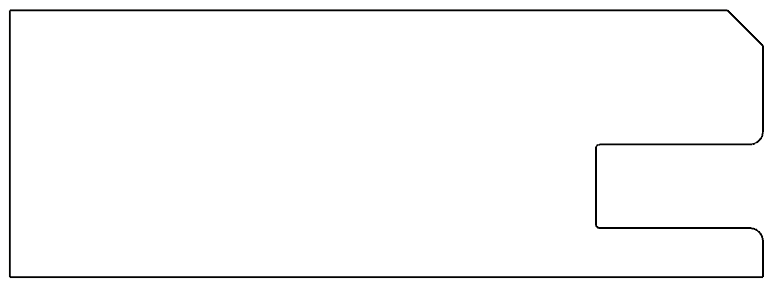
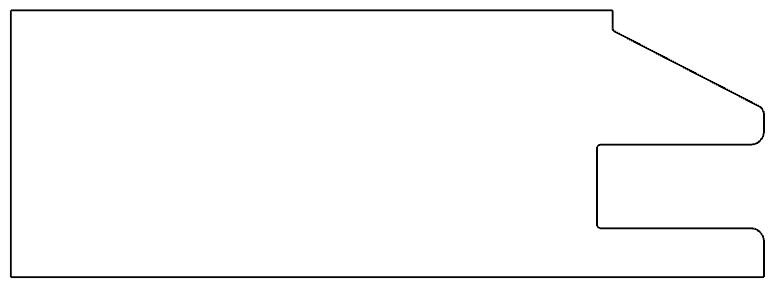
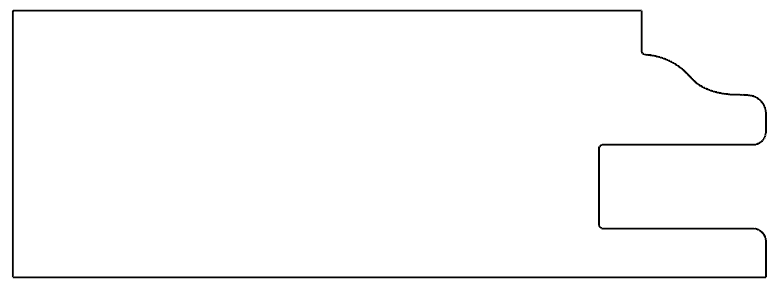
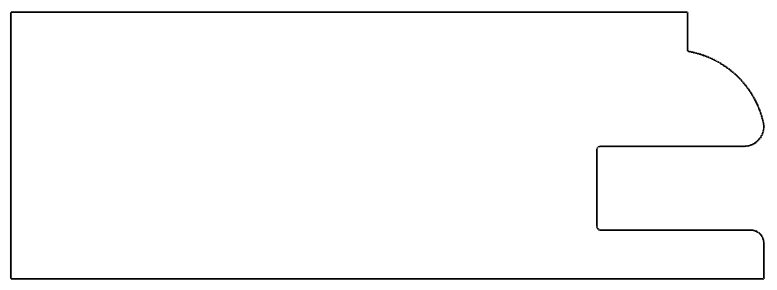
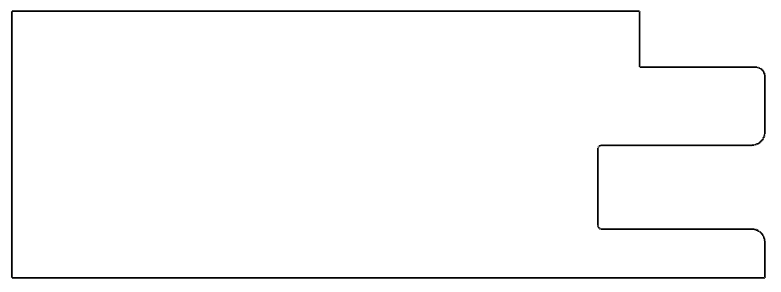
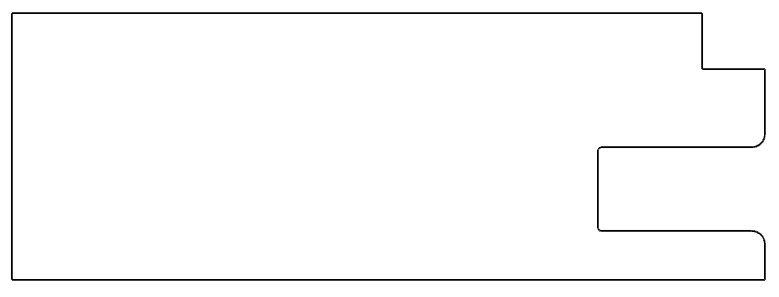
Stile length is equal to the overall height of the front. To calculate the rail length, subtract double the width of the stile from the overall width of the front and add back in double the depth of the mortise (dado). The tenon length matches the depth of the mortise which is ½”.
The formula is: Rail Length = Front Width - (2)Stile width + (2) dado depth
For example, a 18” wide door with a 2 ¼” stile would have a rail length that is 14 ½”.
18 - (2 x 2.25) + (2 x .5) = 14.5
Frame Width
The width of the stiles and rails is an important aspect of the design and structure of the cabinet front. Typically stiles and rails are the same width but there are situations where it makes sense to make them different. For example, the rails on short drawer fronts at the top of a base cabinet may need to be narrower than the stiles to properly accommodate the center panel. Another example, would be a side panel or bar back that has a wider bottom rail to give a bolder look along the floor.
The most common frame width for cabinet fronts is 2 ¼”. This width provides a traditional look and the strength needed for the range of sizes used for cabinet doors and drawer fronts. This is also the minimum width that accommodates hinge bores for cabinet doors.
Widths available for stiles and rails are: 1 ½”, 1 ¾”, 2”, 2 ⅛”, 2 ¼”, 2 ½”, 2 ⅝”, 2 ¾”, 3”, 3 ¼”, 3 ½”, 3 ¾”, 4”
Bottom rails are also available in the following widths: 5”, 6”, 7”, 8”, 9”. These larger bottom rail dimensions are most commonly used for bar backs or cabinet side panels.
Midrails and center stiles always match the main frame profile and width.
Outside Edge Profiles
The outside edge profile of the cabinet frame is machined after the five pieces are assembled and the thickness is calibrated. This process not only adds the profile but it brings the front to the required size and ensures that it is square.
Current standard outside profiles:
EP61 - Square edge
EP62 - 1/32” Chamfer
EP63 - ⅛” Chamfer
EP65 - ⅛” Roundover
EP66 - Step and Ogee
EP67 - S Edge
EP68 - Step & Roundover
EP69 - Rabbet
EP71 - Waterfall
EP72 - Step & Slope
Mortise & Tenon Cabinet Front Center Panels
The center panel is the middle area that is surrounded by the four outside boards. This is typically solid but can also be left open for glass or grids. Please note: Grids (mullion bars) are not currently available.
The center panel codes indicate the profile that is machined around the outside as well as the thickness of the panel. Panels are available in ¼”, ⅜”, and ⅝” thicknesses.
Minimum and maximum sizes refer to the actual size of the panel or opening itself. To calculate the panel size where the center panel intrudes into the mortise (dado) ⅜” on all sides:
Panel Width = Total Front Width - Stile Width(2) + dado intrusion(2)
For example: A cabinet door that is 18” wide with a frame width of 2 ¼” has a panel width of 14 ¼”
18 - (2 x 2.25) + (2 x .375) = 14.25
CP41 - ¼” thick. No profile; Available in MDF or veneered MDF core plywood; Minimum size: 4” W x 2” H
CP42 - ⅝” thick raised panel with step and slope; Available in MDF and solid hardwood; Minimum size: 6” W x 4 ⅛” H
CP43 - ⅝” thick raised panel with step and curve; Available in MDF and solid hardwood; Minimum size: 6” W x 4 ⅛” H
CP44 - ⅝” thick raised panel with curve; Available in MDF and solid hardwood; Minimum size: 6” W x 4 ⅛” H
CP45 - ⅜” thick flat panel with inverted curve; Available in MDF and solid hardwood; Minimum size: 6” W x 4 ⅛” H
CP46 - ⅝” thick raised panel with angled step and S-curve; Available in MDF and solid hardwood; Minimum size: 6” W x 4 ⅛” H
CP47 - ⅝” thick raised panel with step/roundover and S-curve; Available in MDF and solid hardwood; Minimum size: 6” W x 4 ⅛” H
FO - Frame only, no panel; Minimum Size: 4 ⅛” W x 4 ⅛” H; Maximum size: 20” W x 36” H
G22 - Grids - 4 equal size lites; Minimum Size: 8” W x 8” H; Maximum size: 16” W x 20” H
G23 - Grids - 6 equal size lites; Minimum Size: 8” W x 20” H; Maximum size: 16” W x 31” H
G24 - Grids - 8 equal size lites; Minimum Size: 8” W x 32” H; Maximum size: 16” W x 42” H
G25 - Grids - 10 equal size lites; Minimum Size: 8” W x 42” H; Maximum size: 16” W x 53” H
Cabinet Door Hinge Boring
Hinge boring for cabinet doors consists of a 12.7mm deep x 35mm diameter bore with two mounting points to hold euro-style concealed hinges in place. Hinges are held in place by screws directly in the wood frame or into plastic dowels.
The most common euro-style boring is screw-on. Here the hinges are held to the cabinet door by screws directly in the wood frame. High production cabinet shops may prefer press-in boring where the bore accommodates a 8mm expanding plastic dowel.